












Early Communication Development
Explore early communication milestones and learn how to support language development through responsive interactions and everyday moments.
Welcome to Elastic Brain Academy
Whatever brought you here, whether you’re navigating your toddler’s developmental challenges or you’ve simply noticed something feels different, you’re in the right place. We bring together the specialists your child needs to help close the gap with peers before school starts. Psychologists, behaviour analysts, speech pathologists, occupational therapists, and educators work closely together, so every part of your child’s program fits together instead of feeling scattered.
Every difference is worth understanding now, because “wait and see” rarely closes the gap on its own. If your child doesn’t learn the way other kids do, we find the way they do.


Do you feel like your toddler is a little different from other kids their age? Or does it feel like something more a real delay? Maybe you've noticed the signs. Maybe you're still wondering. Either way, you don't need to have all the answers to take the first step.

0–6 Months
Early signs of developmental differences may appear as early as 2–6 months, including differences in eye contact, social smiling, response to voices, head control, movement, and early vocalising.
Read more6–12 Months
By 9 months, not responding to their name, sitting independently, or using gestures like pointing or waving may indicate developmental differences.
Read more12–18 Months
Not using single words by 16 months or walking by 15–18 months may indicate language or motor delays. Early identification before age 2 can support better developmental outcomes.
Read moreOur Research
Why Early Intervention Matters!
The first few years shape everything that comes after.
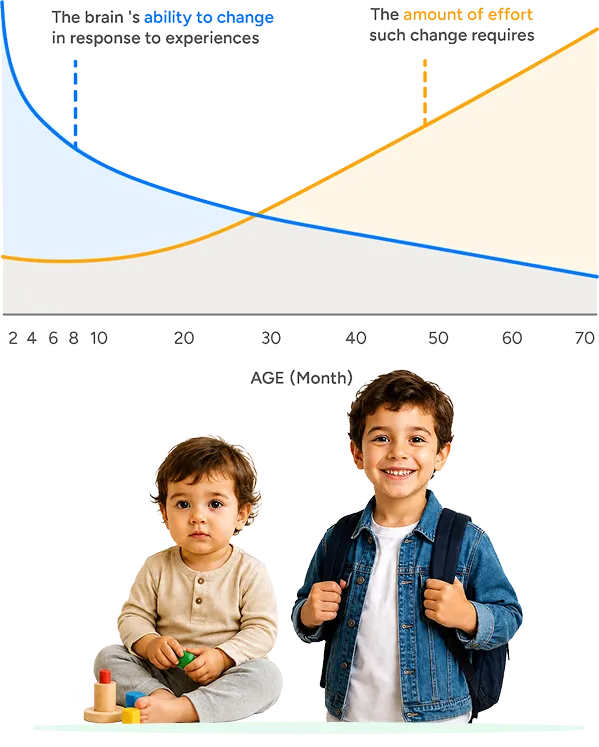
The early years are a sensitive period for brain development, when the brain is most responsive to change, and the effort required for such change is lowest.
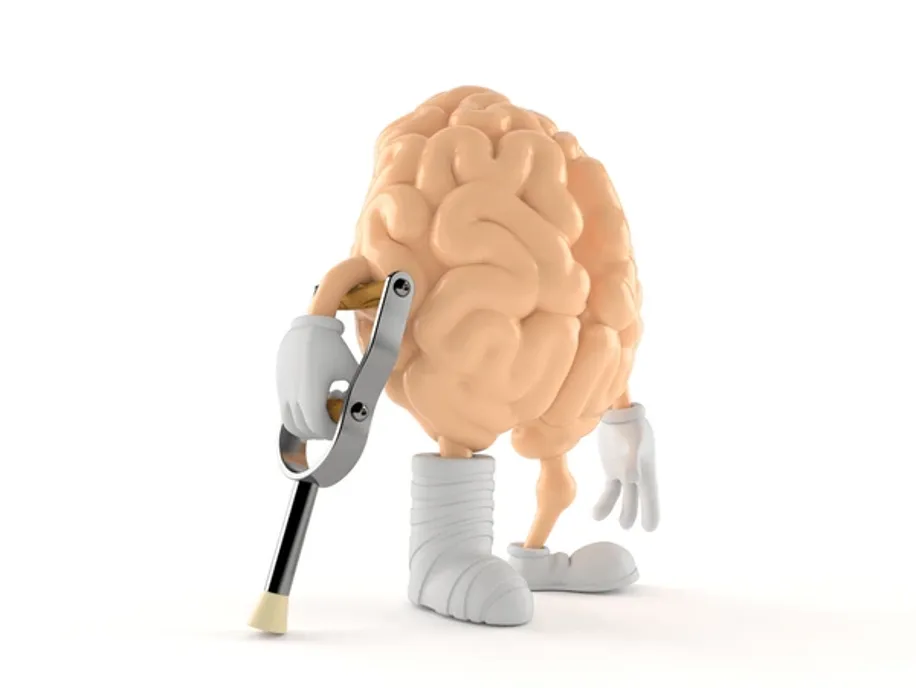
Consistency is what makes early intervention work. Think of a broken bone in a cast: if the cast comes off partway through, the bone won’t heal properly. Effective communication is the cast for your child’s brain it needs to stay on throughout every waking hour, not just during a therapy session. We teach you how to build that consistency, and just as important, what breaks it: a phone, a tablet, or screen time that cuts your child off from the people and the world around them.


Consistency is what makes early intervention work.
Think of a broken bone in a cast: if the cast comes off partway through, the bone won’t heal properly. Effective communication is the cast for your child’s brain it needs to stay on throughout every waking hour, not just during a therapy session. We teach you how to build that consistency, and just as important, what breaks it: a phone, a tablet, or screen time that cuts your child off from the people and the world around them.
▪Available worldwide, online join sessions from anywhere.
▪In person and online across Australia, if you’re local. Payable with NDIS Plan if you are Self Managed or Plan managed.
▪A personalised program, built around your child’s individual needs by Psychologists, behavior analysts, speech pathologists and occupational therapists
▪Delivered by Angel, who is a support worker (can be a family member) or junior therapist which you hire (we can help you find the right person) and leave it with us to train and supervise online.
OUR SERVICES AND SUPPORTS
How we help you & your child
From initial assessment to ongoing therapeutic support, we walk alongside families every step of the journey.


Evidence-Based Therapies We Use
Our programs are grounded in well-established, evidence-based approaches to early autism intervention, including the Early Start Denver Model (ESDM), parent-mediated interventions, and applied behavior principles focused on early development.

We support children in developing communication skills, including understanding language, expressing needs, sharing ideas, and connecting with others.

Children learn skills such as taking turns, sharing, building friendships, understanding social cues, and participating in group activities.

Children develop practical skills for daily life, including self-care, following routines, organisation, eating, dressing, and participating in home.

We support children in developing attention, memory, problem-solving, flexibility, and other skills that help them participate successfully.

We help children understand and manage their behaviour, reduce distress, build emotional regulation, and develop positive strategies especially for children with Autism.
Why families choose us
Three things families tell us they didn’t expect to find and can’t imagine going without now.
One Team, One Plan
Most families end up juggling separate providers who don’t talk to each other. Our specialists work from a single coordinated plan for your child.
Start Without the Wait
Assessment and therapy waitlists can stretch 6–12+ months in many places. Because we deliver care online worldwide, your child can start progressing now.
Progress You Can Actually See
Not vague check-ins. You get clear, ongoing visibility into what’s working, what’s changing and what’s next for your child.

Explore early communication milestones and learn how to support language development through responsive interactions and everyday moments.

Copyright ©2026, Elastic Brain Academy. All rights reserved.